| |
|
Erskine
Bowles appointee Interim NC
A&T Chancellor Lloyd V.
Hackley and UNCG Chancellor
made the Request to
Establish The JSNN March 7,
2006. |
 |
|
| |
|
Fraudulent claiming
HBCU NC A&T and HWI UNCG were
partners in Board of Governors designated
NCGS: 116-198.34. (8b) NC
A&T/UNCG Joint
Millennial Campus.
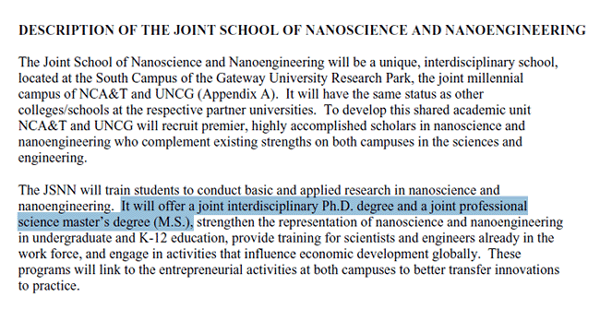
May 2007 UNC Board of Governors
established alleged Joint School
of Nanoscience and Nanoengineering,
at bogus NC
A&T / UNCG Joint Millennial Campus,
UNCG affiliate, Gateway University
Research Park, Inc.; to offer (a)
joint interdisciplinary Ph.D. degree
and (a) joint professional science
master's degree. |
|
| |
|
|
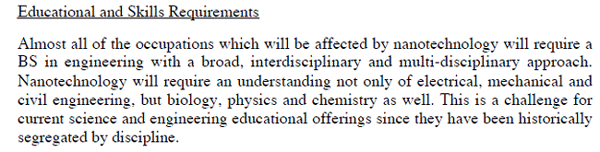
Education and
Skill Requirements
Almost all of the occupations which
will be affected by nanotechnology
will require a BS in engineering
with a broad, interdisciplinary and
multi-disciplinary approach.
Nanotechnology will require an
understanding not only of
electrical, mechanical and civil
engineering, but biology, physics
and chemistry as well. |
 |
|
PCG/UNC-NCCCS/UNC Interim report
3.doc/RB.SP.PC.CR.ATPCC.1/CC.14/10May05 |
|
| |
| |
 |
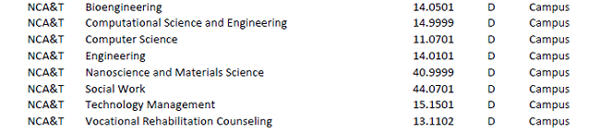 |
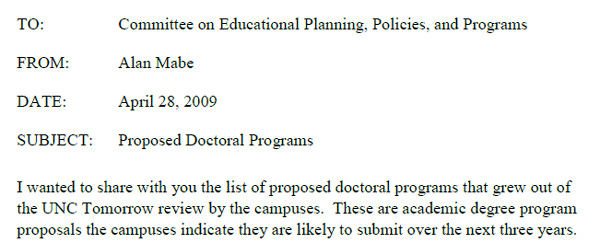
| Dr.
Alan Mabe Senor Vice
President for Academic
Affairs April 28, 2009
to Ed Planning, Ph.D.
Memorandum
degree proposals
indicate NC A&T plan
to offer Nanoscience and
Material Science
(Nanoengineering). |
|
|
| |
|
UNC Board of
Governors
January 2007
authorized
UNC
Charlotte,
which has an
Engineering
School, to
offer a
Ph.D. in
Nanoscale
Science.
Offering Nanoscale
Science was
not a
Substantial
Change as
defined by
the SACS for
UNC
Charlotte.
Nov. 2012
UNC Board of
Governors
authorized a
Master’s in
Nanoengineering
to Land
Grant
Institution
NC State,
which has an
Engineering.
Offering
Nanoengineering
was not a
Substantial
Change as
defined by
the SACS for
NC State.
Consistent
with other
engineering
schools in
the UNC
System
offering
Nanoscience
and
Nanoengineering
(Material
Science)
programs are
not
Substantial
Changes as
defined by
the SACS
and consistent
with the
education,
curricular,
mission and
goals of NC
A&T State
University.
No liberal
arts school
offered
Nanotechnology
degrees in
the UNC
System |
|
|
| |
|
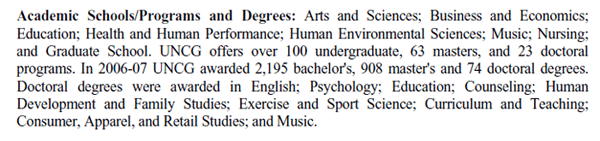
University of
North Carolina
at Greensboro
2008-2009
Profile doctoral
degrees were
awarded in
English;
Psychology;
Education;
Counseling;
Human
Development and
Family studies;
Exercise and
Sport Science;
Curriculum and
Teaching;
Consumer,
apparel, and
Retail Studies;
and Music. |
|
 |
|
University of
North Carolina
at Greensboro
2008-2009
Profile |
|
| |
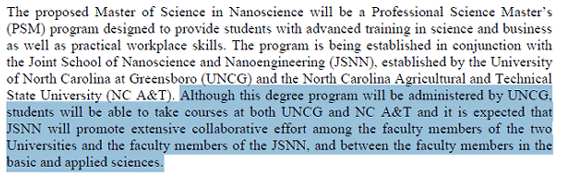
UNC Greensboro Nanoscience
degrees requires access to
NC A&T academic programs and
research: “Although the
degree is in Nanoscience
(does not include
Nanoengineering)

students will be given the
opportunity to take relevant
courses at the School of
Engineering at North
Carolina A&T University and
must be able to work on
collaborative projects with
faculty in the School of
Engineering. |
| |
|
Unlike land
grant cross-town historical
Black NCA&T with strong
programs in engineering
offering Nanoscience
constituted a Substantive
Change as defined by SACS
from previous approved
circular at historical white
women UNC Greensboro
Liberal Arts with nursing
and music programs .
(UNCG) Rebecca Adams to
(SACS) Tom Benberg: Sarah
Armstrong Subject: Request
for interpretation of
accuracy of nanoscience
message, April 13, 2010:
The bottom
line, however, is that we
need to submit a full
prospectus and need to do so
as soon as possible. This
request will be for approval
to initiate a new off-campus
site (South Campus) and to
initiate a new degree
program (MS in Nanoscience)
at that site. Contrary to
previous interpretations,
both represent substantive
changes.. Due to the
confusion, they are willing
to waive the requirement
that we do so 6 months in
advance and will usher it
though the approval process
in a timely way so that we
can accept students into
UNCG's MS in Nanoscience
program next fall. Emphasis
added |
|
|
| |
UNC Policy for
Interdisciplinary Degree

An Interdisciplinary Degree program
involves two or more academic units,
either on the same or
different campuses in a formal
agreement to offer a program of
study drawing on two or more
disciplines that will result in a
student being awarded an
interdisciplinary degree. If more
than one campus is involved in
offering the program it would also
be a joint degrees. |
| |
United States v.
Fordice, 505 U.S. 717 (1992) a
United States Supreme Court case
that resulted in an eight to one
ruling that the eight public
universities in Mississippi had not
sufficiently integrated and that the
state must take affirmative action
to change this under the Equal
Protection Clause and Title VI. This
is not a legal setting but context
comparison UNC BOG & SOCS
policies in light of the selected
text held in UNITED STATES v.
FORDICE, GOVERNOR OF MISSISSIPPI :
..If the State
perpetuates policies and practices
traceable to its prior de jure dual
system that continue to have
segregative effects ...implicit in
the court’s finding of “unnecessary”
duplication is the absence of any
educational justification ....and
such policies are without sound
educational justification and can be
practicably eliminated, implicated
the Equal Protection clause... ,
emphasis added.
Clearly
unnecessary duplication take place
when across-town Liberal Art UNC
Greensboro with programs in music
and nursing, requiring relevant
courses be taken at the School of
Engineering at North Carolina A&T
University and will be able to work
on collaborative projects with
faculty in the School of
Engineering”, except for
unvarnished racism offering
Nanotechnology degrees? |
|
|
| |
|
Contractual Agreement –
typically is one in
which an institution
enters an agreement for
receipt of
courses/programs or
portions of courses or
programs (i.e., clinical
training internships,
etc.) delivered by
another institution or
service provider.
[SUBSTANTIVE CHANGE FOR
SACSCOC ACCREDITED
INSTITUTIONS Policy
Statement]. Therefore a Contractor,
institution or service
provider enters
into an agreement to
provide courses/programs
or portions of courses
or program |
|
| |
|
|
|
| |
|
|
| |
|
 |
|
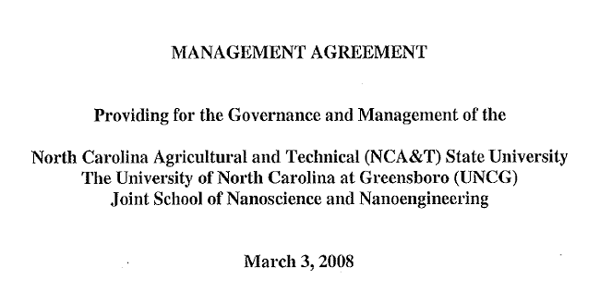
JSNN
Management Agreement March 3, 2008: Article
5. Degrees.
Degrees will be awarded jointly NCA&T
and UNCG; Article
1: Mission and Organizing Principles.
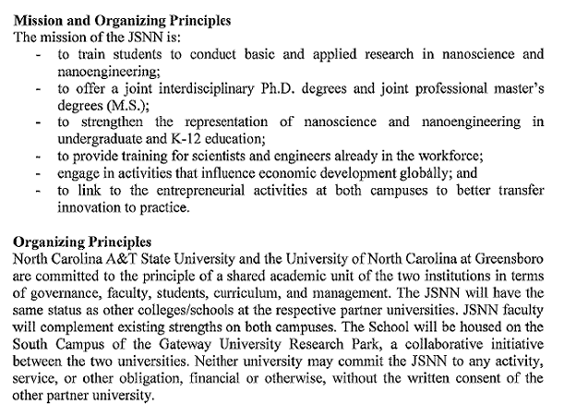
NCA&T and UNCG are committed to the
principle that the JSNN is a shared
academic unit of the two institution in
terms of governance, faculty, students, curriculum,
and management; constitute Collaborative
academic arrangements are
agreements between institutions purposes
of awarding academic credits and/or
educational program completion
credentials, e.g., certificates,
diplomas, degrees or transcripts. |
| |
|
NCA&T Chancellor Battle
and UNCG Chancellor Sullivan signed JSNN
Management Agreement dated March 3, 2008
:
· Mission:
offer joint interdisciplinary Ph.D.
degree and joint professional master’s
degrees (M.S.) Nanoscience,
· Organizing
Principle:
That NCA&T and UNCG are committed to the
principle that the JSNN is a shared
academic unit in terms of governance,
faculty, students, curriculum, and
management. Emphasis added.
· Article
5 Curriculum/Degrees: Degrees
will be awarded jointly by
NCA&T and UNCG |
| JSNN March 3, 2008
Management Agreement Organizing
Principles North Carolina A&State
University and the University of North
Carolina at Greensboro are committed to
the principle of a shared academic unit
of the two institutions in terms of
governance, faculty, students, curriculum, and
management. JSNN shared academic in
terms of curriculum constituted agreement
for receipt of courses/programs or
portions of courses or programs |
|
| |
In letter dated November
20, 2008 to
Dr. Beele Wheelan, President Commission on
Colleges, SACS allegedly by Alton Thompson (NC
A&T) and David Perrin (UNCG) stated; we would
greatly appreciate receiving your guidance
regarding the next steps for seeking SACS-COC authorization
for JSNN,
it respective degree programs, and affiliated
activities. Emphasis added
The intent of the school is be
become a world-class education and technical
institution and also to become an engine for
economic growth in the Triad and North Carolina
as a whole. Emphasis
added
A Professional Master of Science
in Nanoscience degree and a Ph.D. in Nanoscience
degree are not in the review process by A&T and
UNCG.
The facility will be located on
the South Joint Millennium Campus ( on land that
was originally part of the NC A&T farm),
established as part of the Greensboro Center for
Innovative Development, a collaborative
initiative between the two universities. |
| |
| Ginger Burks ,email,
Mon, 27 Oct 2008 Subject Joint
Nano discussion on Tuesday to Mabe,
Harold Martin, Rob Nelson CC Lisa
Adamson. Hi everyone , We scheduled to
discuss the Joint Nanoscience and
Nanoengineering proposal Tuesday. I've
attached the latest version of the
documents for your review. Perhaps we
can modify these to denote our agreement
on all these topics and then send to the
campuses for final sign off so that
funds can be released. Clearly we we
can modify these to denote our agreement
on all these topics and then send to the
campuses for final sign off , indicate
the administration wrote the management
agreement. |
|
 |
|
| |
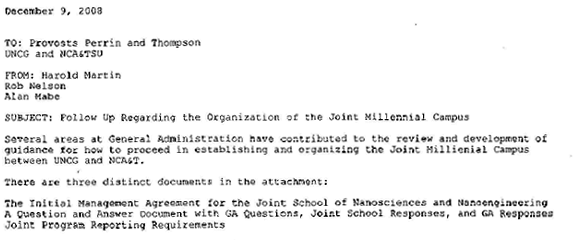
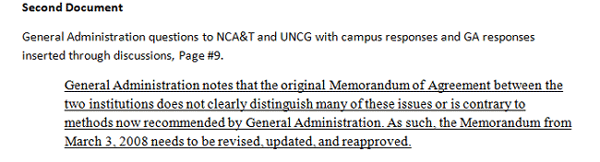
 Harold
Martin, Rob Nelson, Alan Mabe, email
dated December 09, 2008, Subject Joint
Millennial Campus to: Provosts Perrin
and Thompson UNCG and NCA&TSU ,
attachment Second
Document Page 9 UNC GA/Questions from
UNC General Administration’s notes
the March 3, 2008 Memorandum (Management
Agreement) needs to be revised, updated
and reapproved. Harold
Martin, Rob Nelson, Alan Mabe, email
dated December 09, 2008, Subject Joint
Millennial Campus to: Provosts Perrin
and Thompson UNCG and NCA&TSU ,
attachment Second
Document Page 9 UNC GA/Questions from
UNC General Administration’s notes
the March 3, 2008 Memorandum (Management
Agreement) needs to be revised, updated
and reapproved. |
 |
 |
| |
 |
|
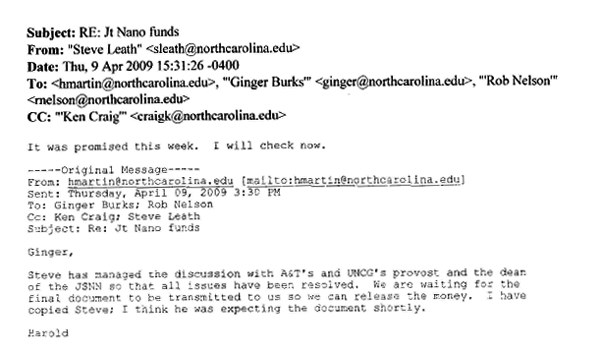
“Steve has
managed the discussion with
A&T's and UNC-G's provost and
the dean of the JSNN so that all
issues have been resolved." said
Dr. Harold Martin, Sr. (Email
April 9). |
|
|
| |
Reported
in the media: UNC-Greensboro
Board of Trustees Nov. 2,
2006, approved budget
request part of a 19-page
proposal outlining plans for
the nanotech program
scheduled to go before
trustees at A&T Nov. 15. The
school, as it is proposed,
would offer a doctorate in
Nanoscience and
Nanoengineering and a
professional science
master's program, emphasis
added. Officials
from both A&T and UNC-G
 declined
to comment on the proposal
because it had not yet been
presented to the A&T
trustees. It must be
approved by both schools
before it can be submitted
to the UNC General
Administration for
evaluation. “ [5]
. The College [College of
Arts and Sciences] was a
central player in the
continuing work to establish
the Joint School of
Nanoscience and
Nanoengineering with NC A&T
University. Degrees or
programs being considered
for the future· MS in
Nanoscience and Ph.D. in
Nanoscience. [UNC-G
Curricular Planning,
Academic Affairs Annual
Report AY 2007/08] declined
to comment on the proposal
because it had not yet been
presented to the A&T
trustees. It must be
approved by both schools
before it can be submitted
to the UNC General
Administration for
evaluation. “ [5]
. The College [College of
Arts and Sciences] was a
central player in the
continuing work to establish
the Joint School of
Nanoscience and
Nanoengineering with NC A&T
University. Degrees or
programs being considered
for the future· MS in
Nanoscience and Ph.D. in
Nanoscience. [UNC-G
Curricular Planning,
Academic Affairs Annual
Report AY 2007/08] |
|
| |
|
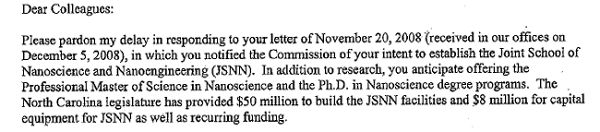
Dr. Belle S.
Wheelan, Ph.D.
President Commission
on Colleges Letter
dated March 17,
2009 Address to
Dr. Alton Thompson,
Interim Provost and
Vice Chancellor for
Academic Affairs and
Dr. David H. Perrin,
Provost and Vice
Chancellor for
Academic Affairs
University of North
Carolina Greensboro
said pardon my delay
in responding to
your letter of
November 20, 2008 in
which you notified
the Commission of
your intent to
establish the Joint
School of
Nanoscience and
Nanoengineering
(JSNN). emphasis
added. |
 |
|
In addition to
research, you
anticipate offering
the Professional
Master of Science in
Nanoscience and the
Ph.D. in Nanoscience
degree programs. In
addition to a joint
prospectus, please
submit a joint
document
demonstrating your
compliance with the
Commission policy
and guideline, Joint
Curricular Ventures
Involving the Award
of Credit by Member
Institutions. |
|
|
|
|
| |
 |
| |
Erskine Bowls UNC General Administration, approved Amended and Restated Management Agreement (April 2009) in part altered JSNN March 03, 206 Management Agreement Mission from offering joint interdisciplinary Ph.D. degree and joint professional science master's degrees; to offering (stand-alone) interdisciplinary Master of Science and Ph.D. degrees and a Professional Master of Science in Nanoscience degree, an unauthorized change in mission. |
| |
 |
| Organizing Principles. NCA&T and UNCG are committed to the principle that the JSNN is a shared academic unit of the two institutions in terms of governance and management -explicitly - removing shared academic unit. UNCG will be the home institution for nanoscience faculty, students and the nanoscience curriculum and degree programs. .NC A&T will be the home institution for nanoengineering faculty, students and the nanoengineering curriculum and degree programs |
|
|
|
|
|
|
|
| |
|
Erskine Bowls
UNC General Administration,
approved Amended
and Restated Management
Agreement (April
2009) in part altered JSNN
March 03, 206 Management
Agreement Mission from
offering joint
interdisciplinary Ph.D.
degree and joint
professional science
master's degrees; to
offering (stand-alone)
interdisciplinary Master of
Science and Ph.D. degrees
and a Professional Master of
Science in Nanoscience
degree, an unauthorized
change in mission. |
| |
|
|
|
Organizing
Principles. NCA&T
and UNCG are committed to
the principle that the JSNN
is a shared academic unit of
the two institutions in
terms of governance and
management -explicitly -
removing shared academic
unit. UNCG
will be the home institution
for nanoscience faculty,
students and the nanoscience
curriculum and degree
programs. .NC A&T will be
the home institution for
nanoengineering faculty,
students and the
nanoengineering curriculum
and degree programs |
|
| |
|
NC A&T Chancellor Dr. Stanley Battle
resigned effective June 30, 2009.
Dr. Harold Martin became the next
chancellor at NC A&T July 2009. |
|
|
| |
|
|
| |
|
 |
|
|
|
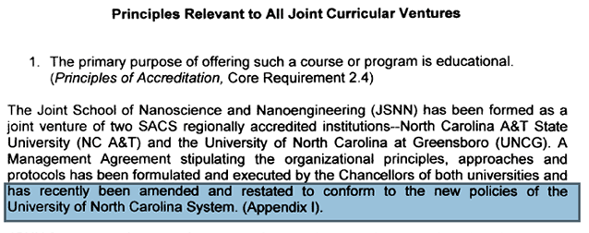
Principles Relevant to
All Joint Curricular
Ventures (1.) A
Management Agreement
stipulating the
organizational
principles, approaches
and protocols has been
formulated and executed
by the Chancellors of
both universities and had
recently been amended
and restated to conform
to the new policies of
the University of North
Carolina System. (Appendix1). |
| |
| |
 |
|
3.
Principles of
Accreditation,
Comprehensive Standard
3.4.6 |
| |
|
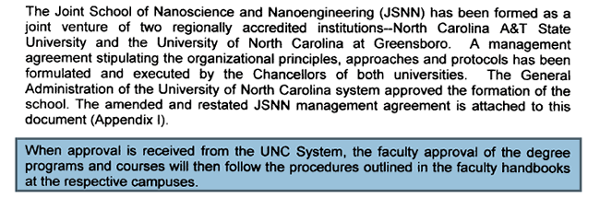
Principles Relevant to
All Joint Curricular
Ventures (3.), The Joint
school of Nanoscience
and Nanoengineering
(JSNN) has been formed
as a joint venture of
two regionally
accredited
institutions. The
General Administration
of the University of
North Carolina system
approved the formation
of the school. The
amended and restated
JSNN management
agreement is attached to
this document (Appendix
1). When approval is
received from the UNC
System, the faculty
approval of the degree
programs and courses
will then follow the
procedures outlined in
the faculty handbooks at
the respective campus
clear indicate the
General Administration
of the University of
North Carolina system
JSNN was not approved by
UNC System / Board of
Governors. |
| |
|
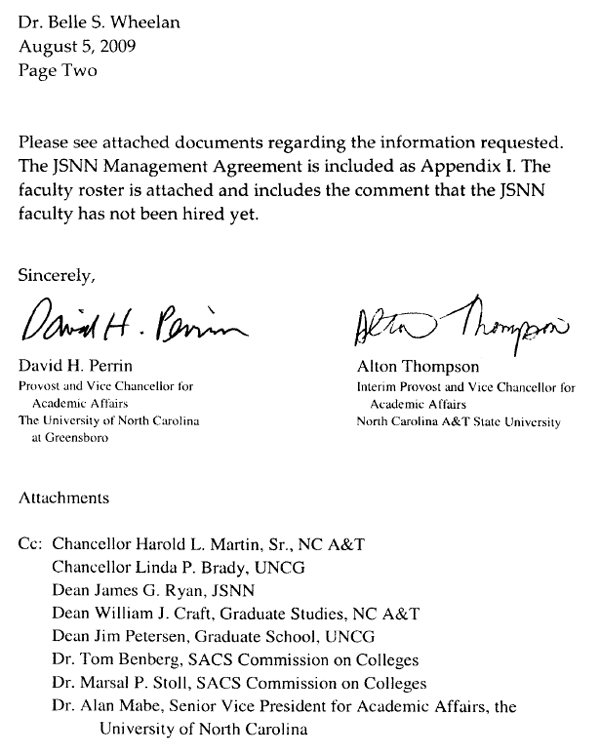
Dr. Alton
Thompson,
Interim Provost
and Vice
Chancellor for
Academic Affairs
and Dr. David H.
Perrin, Provost
and Vice
Chancellor for
Academic Affairs
University of
North Carolina
Greensboro, in
letter dated
August 5, 2009
to Dr. Belle
Wheelan said
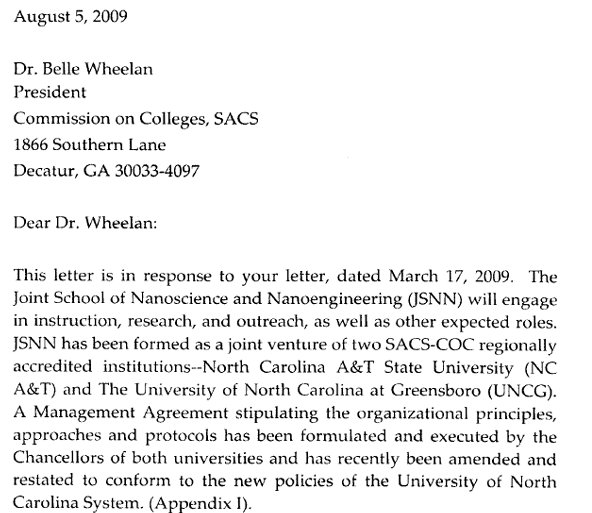
this letter is
in response to
your letter
dated March 17,
2009. |
| |
|
 |
| |
|
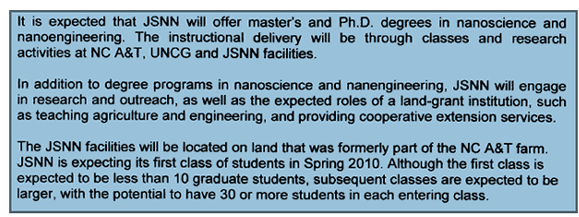
Enclosure
Principles
Relevant to All
Joint curricular
Ventures (1.)
says In addition
to degree
programs in
nanoscience and
nanoengineering,
JSNN will engage
in research and
outreach, as
well as the
expected roles
of a land-grant
institution,
such as teaching
agriculture and
engineering, and
providing
cooperative
extension
services. |
|
| |
|
|
|
University of
North Carolina
at Greensboro
2008-2009
Profile |
|
| |
 |
|
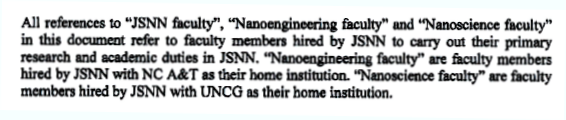
Amended and Restated
Management Agreement
says all references to
"JSNN faculty,
Nanoengineering faculty
and Nanoscience faculty
in this document refer
to faculty members hired
by JSNN to carry out
their primary research
and academic duties in
JSNN. "Nanoengineering
faculty are faculty
members hired by JSNN
with NC A&T as their
home institution.
Nanoscience faculty are
faculty members hired by
JSNN with UNCG as their
home institution. |
|
|
| |
 |
 |
|
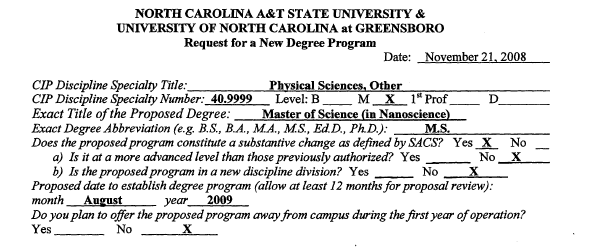
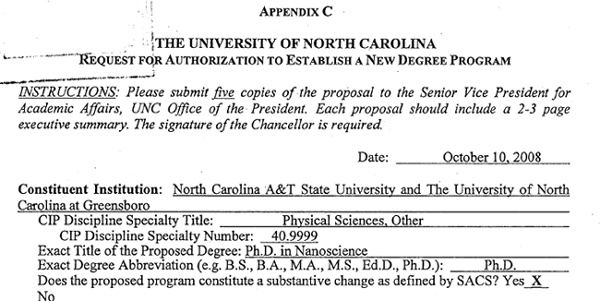
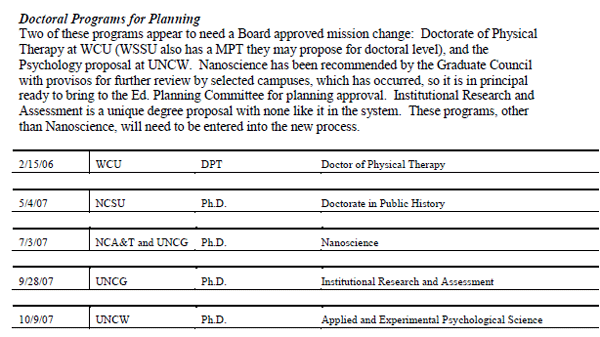
NC A&T and UNCG submitted Request
for Authorization to Establish a New
Degree Program , Ph.D. in
Nanoscience dated October 10, 2008
and Master of Science in Nanoscience
dated November 21, 2008 to UNC
General Administration, CIP
discipline 40.999. Two
programs with the same CIP code
should initially be viewed as
duplicative. [UNIVERSITY
OF NORTH CAROLINA PRO |
| |
|
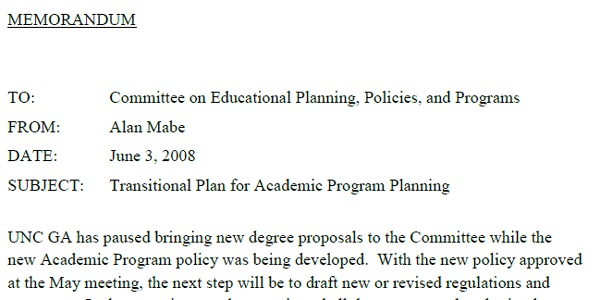
UNC Vice
President of Academic
Development Dr Alan Mabe
June 3, 2008 notified the
Committee on Educational
Planning, Policies, and
Programs that UNC GA paused
bringing new degree
proposals to the Committee
while the New Academic
Program policy was being
developed. Among doctorial
programs that would continue
pursuant existing policy was
NCA&T and UNCG Ph.D.
Nanoscience. |
|
|
| |
|
 |
| |
 |
|
|
|
Alleged, NC A&T Dr.
Alton Thompson, Interim Provost and
Vice Chancellor for Academic Affairs
and UNCG Dr. David H. Perrin,
Provost and Vice Chancellor for
Academic Affairs, in letter
dated August 5, 2009 to Dr. Belle
Wheelan enclosure stated a
management stipulating the
organizational principles,
approaches and protocols has been
formulated and executed by
Chancellor of both universities and
has recently been amended and
restated to conform to the new
policies of the University of North
Carolina System (Appendix 1).
Appendix 1 is Amended and Restated
Management Agreement April 2009.
Article 5. Curriculum/Degrees
Degrees. Nanoengineering degrees
will be awarded by NC A&T.
Nanoscience degrees will be awarded
by UNCG. |
| |
|
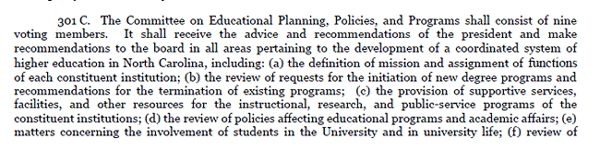
CODE 301C. The
Committee on
Educational
Planning,
Policies, and
Programs shall
receive the
advice and
recommendations
of the president
and make
recommendations
to the board in
all areas
pertaining to
the development
of a coordinated
system of higher
education in
North Carolina,
including: (a)
the definition
of mission and
assignment of
functions of
each constituent
institution; (b)
the review of
requests for the
initiation of
new degree
programs and
recommendations
for the
termination of
existing
programs [SECTION
301. THE
STANDING
COMMITTEES’
JURISDICTION] |
|
|
|
|
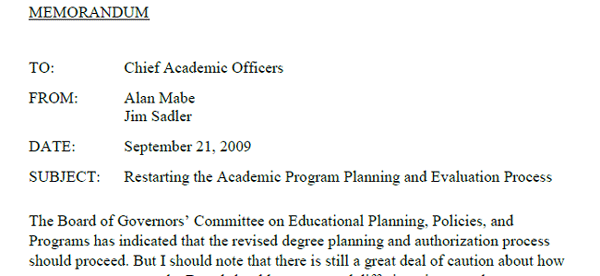
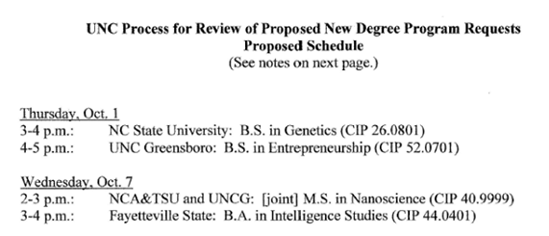
Memorandum to Chief
Academic Officers from Alan Mabe and Jim
Sadler, Subject Restating the Academic
program Planning and Evaluation Process
dated September 21, 2009 proposed
schedule for Wednesday, Oct. 7, 2009
included entry NCA&TSU and UNCG [joint]
M.S. in Nanoscience CIP 40.999). |
 |
 |
|
Alan Mabe Memorandum dated September 21,
2009 to Chief Academic Officers Subject:
Restarting the Academic Program Planning
and Evaluation Process, Proposed new
degree Program Requests Proposed
Schedule listed Wednesday, Oct. 7, 2-3
p.m.: NCA&T SU and UNCG: [joint] M.S. in
Nanoscience (CIP 40.999}, clearly
indicated UNC System/ BOG had
not approved UNC System General
Administration Joint School of
Nanoscience and Nanoengineering circular/
degrees Nanoengineering degrees will be
awarded by NC A&T. Nanoscience degrees
will be awarded by UNCG. |
| |
|
Unambiguous Alan Mabe and
Jim Sadler Memorandum revised degree
planning and authorization should
continue, NCA&TSU and UNCG (joint) M.S.
in Nanoscience Wednesday Oct. 7, was
evidence August 5, 2009 letter to Dr.
Wheelan allege approaches and protocols
(Appendix I) were not amended and
restated to conform to the new policies
of the University of North Carolina
System. (Appendix I). |
| |
| The
suspension of taking new programs to
the committee on Educational Planning ,
the first step in development of new
policies for the University of North
Carolina System. Unambiguous taking
new programs to Committee on Educational
Planning which (a) define the mission
and assignment of functions was
suspended between June 3, 2008 and
September 21, 2009 , therefore,
allegations management agreement
stipulating the organizational
principles, approaches and protocols has
been formulated and executed by
Chancellor of both universities and has
recently been amended and restated to
conform to the new policies of the
University of North Carolina System
(Appendix 1) was false. |
| |
|
 |
|
 |
|
 |
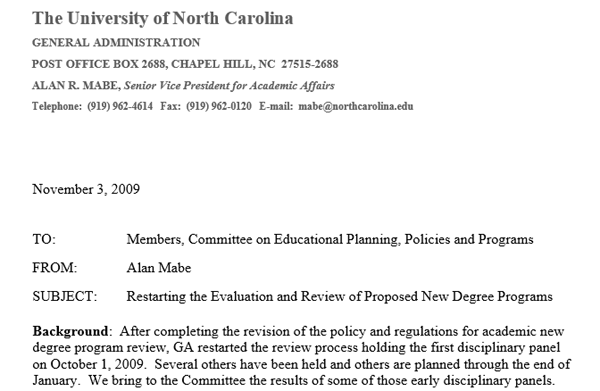
| Dr. Alan
Mabe, Senior Vice President
for Academic Affair
memorandum to Members,
Committee on Education
Planning, Policies and
Programs, dated November 3,
2009, Subject: restating the
Evaluation and Review of
Proposes New Degree
background indicate: |
| |
|
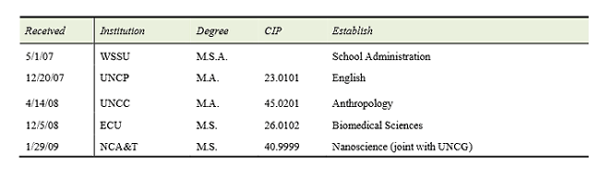
Received |
Institution |
Degree |
CIP |
Established |
|
1/29/09 |
NCA&T |
M.S. |
40.9999 |
Nanoscience
(Joint with UNCG) |
| |
|
|
|
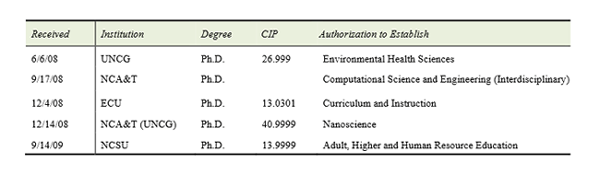
Authorization to
Establish |
|
11/14/08 |
NCA&T (UNCG) |
PhD. |
40.9999 |
Nanoscience |
|
| |
|
|
|
| |
|
Reported in the
Media: "UNCG
and N.C. A&T are partners in the
project. UNCG is offering graduate
degrees in Nanoscience. A&T will
eventually offer degrees in
Nanoengineering."[11] |
| |
|
|
|
|
| |
|
UNC Board of
Governors Minutes
May 2006 |
|
|
|
|
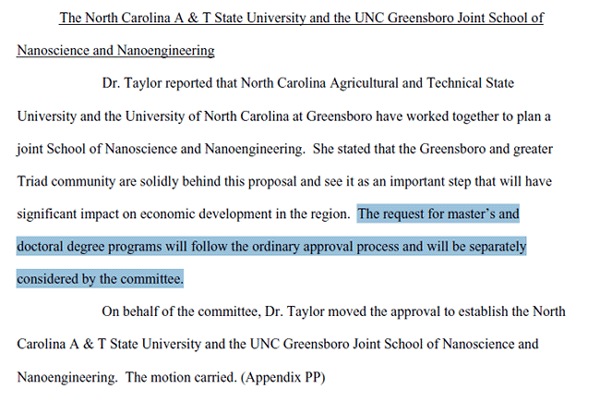
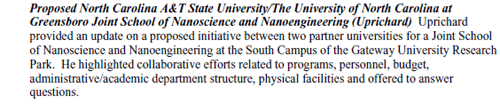
| The North Carolina
A&T State University and the UNC
Greensboro Joint School of Nanoscience
and Nanoengineering. Dr. Priscilla P.
Taylor (Cemala Foundation) reported that
the Greensboro and greater Triad
community are solidly behind this
proposal and see it as an important step
that will have significant impact on
economic development in the region. The
master's and doctoral degree programs
will follow the ordinary approval
process and will be separately
considered by the committee. |
|
| |
|
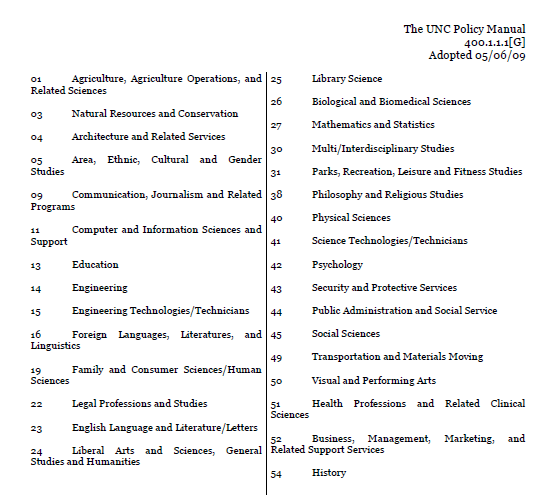
The UNC Policy Manual
400.1.1.1[G] Adopted 05/06/09 |
 |
| |
|
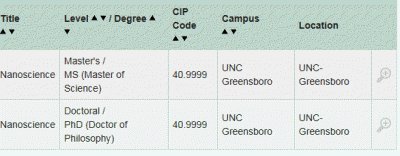
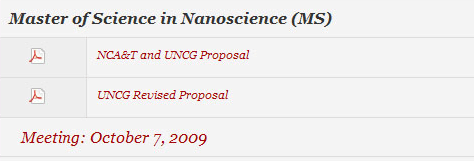
Examining
Nanoscience discipline file at www.northcarolina.edu : |
 |
 |
|
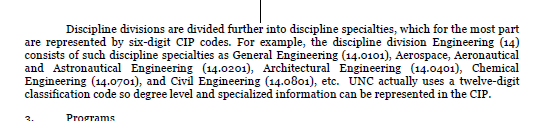
1. The
discipline file contained no
UNCG Notification to plan a
master’s in Nanoscience,
2. The
discipline file contained an unsigned “Revised
UNCG Request to Establish a
Master’s in Nanoscience,
3. The
discipline file contained no
UNCG Request to plan a PhD in
Nanoscience
4. The
discipline file contained no
UNCG Request to Established a
PhD in Nanoscience |
|
| |
|
|
| |
|
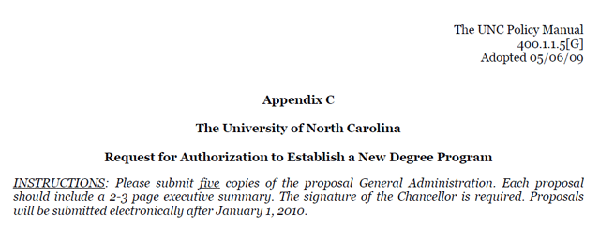
The Chancellor
signature certifies proposal [UNC
Policy Manual 400.1.5(G)] to
establish new degree program was
reviewed and approved by the
appropriate campus committees and
authorities. |
 |
|
| |
|
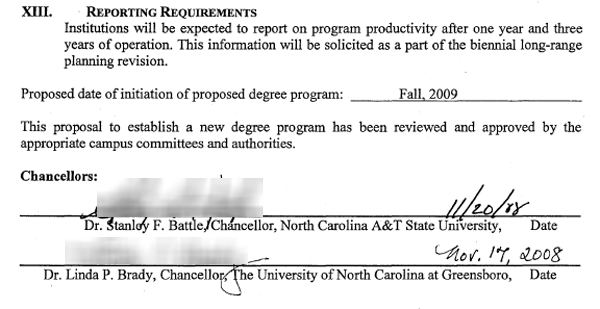
NCAT/UNCG
Joint PhD in Nanoscience |
 |
|
| |
|
Responding to a
Public records request to Dr. David
H. Perrin UNCG Provost & Executive
Vice Chancellor,1/7/11, for a copy
of an UNCG chancellor signed
request to establish stand alone
Masters and PhD Nanoscience degrees
at UNCG, Counsel Steve Serck
responded "In
response to your request of 1/7/11,
no such documents as you described
exists." |
| |
|
Unambiguous
lack of UNCG Chancellor
Dr. Linda Brady signed Proposals
requesting to establish Nanoscience
Professional Master of Science in
Nanoscience and Ph.D. Nanoscience
clearly demonstrated UNCG had not expressed
intentions to establish the degrees,
they had not been approved by the
faculty and administration, and were
not pursuant UNC
Policies 400.1.1,1[G]and
400.1.1.5[G]. |
|
| |
|
Requests to UNC-GA
for a UNCG Request to Plan a PhD and
Request to Establish a standalone
PhD in Nanoscience proscribed by UNC
Guidelines for Academic Program
Development subsection (B) related
to degree authorization Ms. Joni
Worthington (UNC-GA) Vice President
for Communications UNC General
Administration responded to a
public record request for a UNCG
Chancellor signed request to plan
and establish a PhD in Nanoscience
said: “Dr. Alan Mabe in his capacity
as Senior Vice President for
Academic Affairs determined:
· UNCG
was not required to submit a new
request to plan a Ph.D. in
Nanoscience. The joint proposal
submitted by UNCG and NCA&T was
deemed sufficient for the campus to
move forward with planning a
stand-alone degree program.
· UNCG
was not required to submit a new
request to establish a Ph.D. in
Nanoscience. The joint request
submitted by UNCG and NCA&T, which
had already been recommended for
approval by the UNC Graduate
Council, was deemed sufficient for
Board consideration. The Board
of Governors concurred with that
determination in approving the
establishment of the program.
(E-mail 10.08. 2010) “ |
| |
|
| |
|
The President [shall]
promulgate regulations to
implement Board of Governors
Policy.
|
|
 |
|
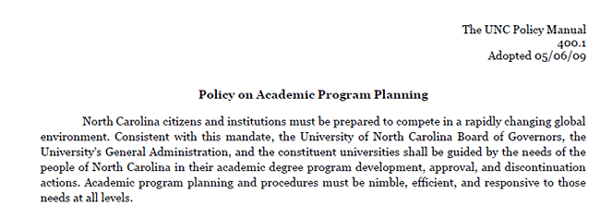
Policy on Academic Program
Planning The UNC Policy
Manual 400.1 Adopted |
| |
|
 |
|
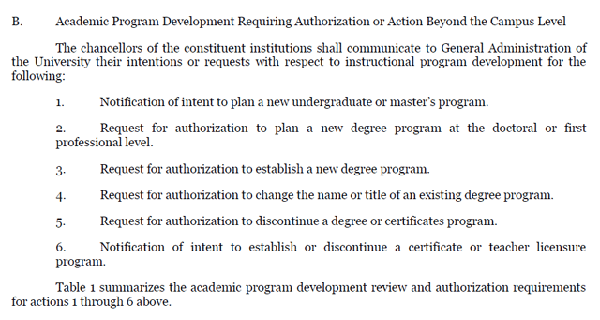
Contradicting
assertions Dr. Mabe in the capacity
of Senior VP for Academic Affairs
etc., are Board approved
Guidelines for Academic Program
Development subsection (B.)
Academic Program Development
Requiring Authorization or Action
Beyond the Campus Level, which says
The chancellors of the constituent
institutions shall communicate to
General Administration of the
University their intentions or
requests with respect to
instructional program development
for Request for authorization to
plan a new degree program at the
doctoral or first professional level
and Request for authorization to
establish a new degree program.
[Guidelines for Academic Program
Development [The UNC Policy Manual
400.1.1.1[G] Adopted 05/06/09 |
|
|
| |
|
Early in the
investigation of
lack of
supporting
documentation
for UNCG
Nanoscience
degree
authorizations
Dr. James Sadler
Associate Vice
President for
Academic
Planning
University of
North Carolina
put forth a
chronology of
authorizations
(e-mail
(08/04/2010). |
| |
May 11, 2007
Board of
Governors
authorizes
establishment of
the Joint School
of Nanoscience
and
Nanoengineering. You
ask about any
request to amend
the Joint
School, but I am
not aware of any
request, emphasis
added. Sadler's
reply indicated
JSNN Mission had
not change to
add
Nanoengineering
degrees. |
| |
|
Dr. Sadler
Chronology
acknowledged
unsigned alleged
“Revised UNCG
Request to
Establish a
Master’s in
Nanoscience
dated Nov. 9,
2009 was JSNN Dean
Jim Ryan; |
|
| |
|
From: James
C. Sadler < >
Date: Sun, Oct 11, 2009 at
10:07 AM
Subject: Re: Revised version
of the Request to Establish
the Professional Master of
Science in Nanoscience
degree program
To: James Ryan <j>
Cc: dhprrin@uncg.edu,
James C Petersen JCPETERS <
>, altont@ncat.edu, kmurray@ncat.edu
Thanks, Jim. I'll confer
with Alan about the Ph.D.
and whether anything is
needed. Jim Sadler
James Ryan wrote:
Jim,
I have attached a revised
version of the Request to
Establish for the
Professional Master of
Science in Nanoscience. I
have included the most
recent update of the JSNN
Management Agreement as well
as revised figures on
enrollment. I have also
provided additional
explanation to address
questions that were asked
during the disciplinary
committee review on
Wednesday. Please review and
let me know if additional
information or clarification
is needed.
Also, similar revisions are
needed for the Request to
Establish the Ph.D. in
Nanoscience. Should I send
the latest version of that
document to you as well?
Thank you.
Jim
James C.
Sadler, Ph.D. Associate Vice
President, Academic Planning
Interim Assoc. VP,
Institutional Research &
Analysis UNC General
Administration |
|
| |
|
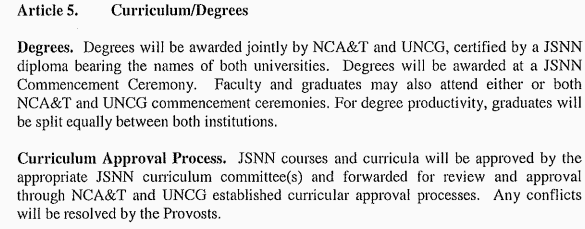
JSNN
Management
Agreement
March 2008 |
 |
|
Curriculum
Approval
Process.
JSNN courses
and
curricula
will be
approved by
the
appropriate
JSNN
curriculum
committee
(s) and
forwarded
for review
and approval
through
NCA&T and
UNCG
established
curricular
approval
processes.
Any
conflicts
will be
resolved by
the
Provosts. |
|
| |
|
Amended
and Restated Management
Agreement |
|
 |
|
| |
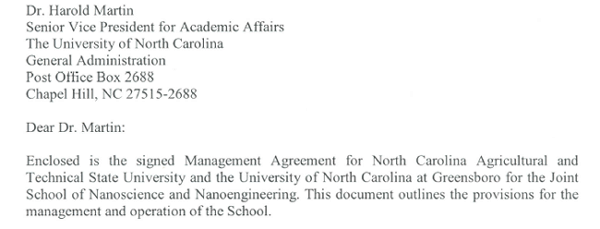
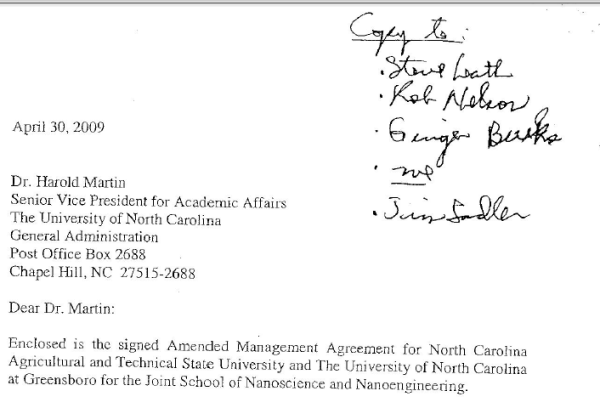
| Pursuant
Amended and Restated Management
Agreement curriculum approval
Process JSNN Dean Ryan alleged
UNC Greensboro Revised Request
to establish Nanoscience MS
should have been submitted to
UNC Greensboro for review and
approval through established
curricular approval process, not
submitted directly to UNC
General Administration therefore unauthorized. |
|
|
| |
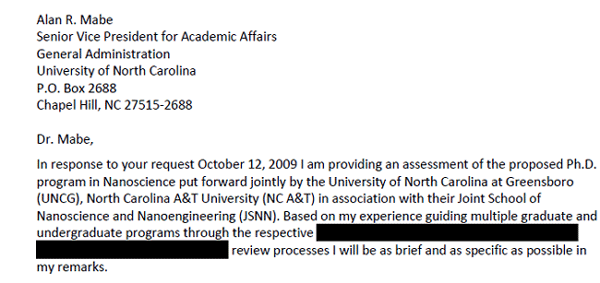
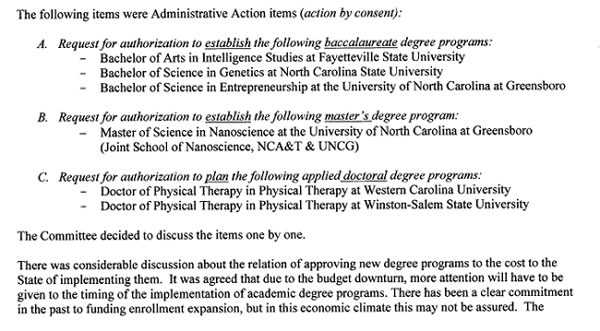
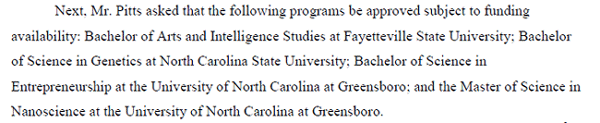
November 13, 2009
UNC Board of Governors
authorizes the UNCG MS
in Nanoscience based on
the revised request
submitted. The summary
that went to the Board
can be viewed in the
Planning Committee
pre-meeting materials at
this location: https://www.northcarolina.edu/bog/index.php. |
| |
 |
| |
 |
| |
 |
| |
 |
 |
|
| |
|
| |
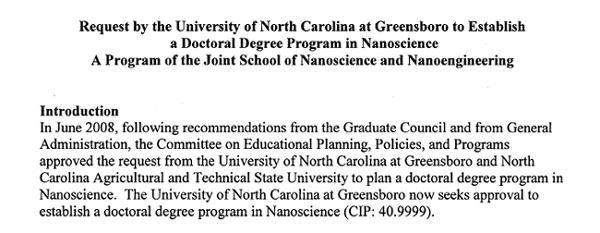
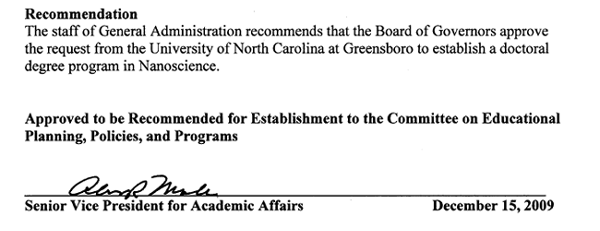
January 8, 2010
UNC Board of
Governors
authorizes the
UNCG PhD in
Nanoscience
based on the
revised request
submitted. The
summary that
went to the
Board can be
viewed in the
Planning
Committee
pre-meeting
materials at
this location: https://www.northcarolina.edu/bog/index.php. |
 |
 |
 |
|
|
|
|
| |
|
|
|
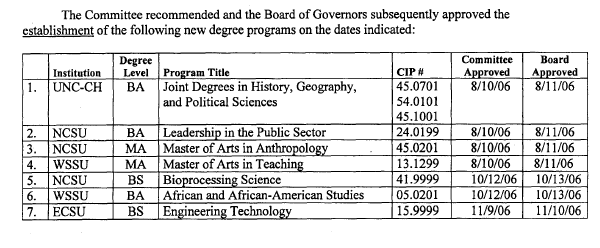
Notwithstanding the
National Center for
Educational Statistics
(NCES), categorized
Nanoscience as CIP 15.1601
Engineering Technologies and
Engineering-Related Fields. UNC
General Administration
applied CIP
40.9999 (Physical Science)
to UNCG academic offering . Note
UNC-G has a School of Arts
and Science. |
 |
| Note Fall
2005 UNC Presidency
transition from President
Molly Broad to
Erskine Bowles. |
| |
Professional Master of
Science in Nanoscience
The 33-hour, non-thesis MS
in Nanoscience follows the
Professional Master of
Science degree model,
featuring course work in
Nanoscience and business and
an internship to provide
practical experience. |
| |
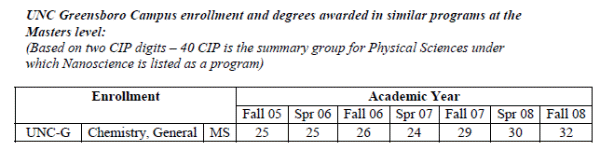 |
UNC General Administration
applied CIP
40.9999 (Physical Science)
to UNCG academic offering determined
UNC at Greensboro offered
only a Master in Chemistry on
the graduate level in the
category of Physical
Science. |
| |
|
|
|
| |
|
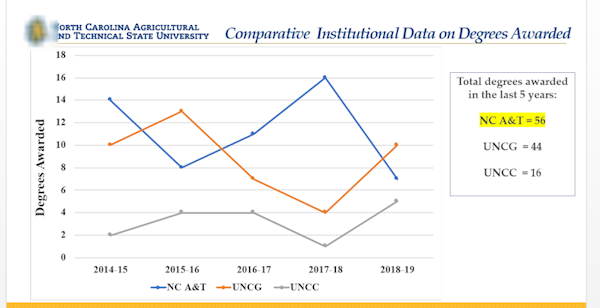
Erskine
Bowles UNC
General Administration
categorizing Nanoscience
Ph.D. as a Physical
Science; examining UNC
Greensboro curricula for
similar Physical Science
Ph.D. programs
determined: |
|
|
|
|
|
| |
 |
|
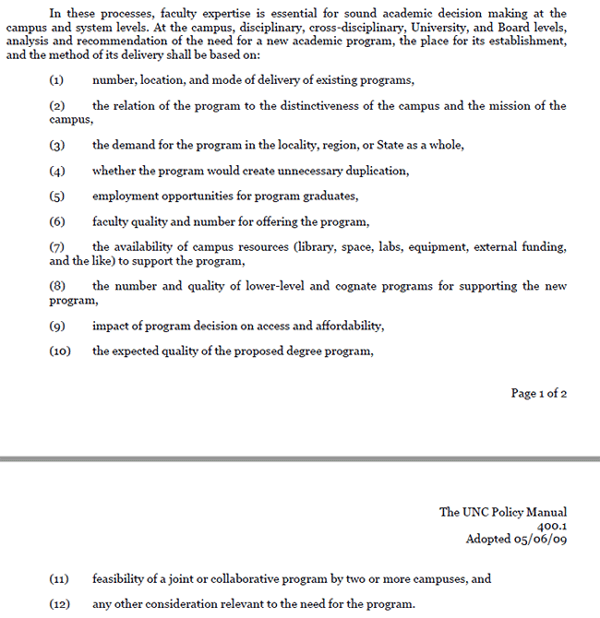
Clearly UNC Board of Governors and
UNC General Administration exploited
HBCU NC A&T Engineering circular and
research to establish Nanoscience MS
and Ph.D. at cross-town white UNC
Greensboro. |
|
| |
 |
 |
|
|
|
The National
Center for
Educational
Statistics
(NCES)
responsible for
collecting and
presenting
statistical data
and information
for the nation;
classifies
Nanoscience and
Nanoengineering
as
Nanotechnology
CIP 15.1601:
Engineering
technologies and
Engineering
related fields. |
|
|
|
PCG/UNC-NCCCS/UNC Interim report 3.doc/RB.SP.PC.CR.ATPCC.1/CC.14/10May05 |
|
|
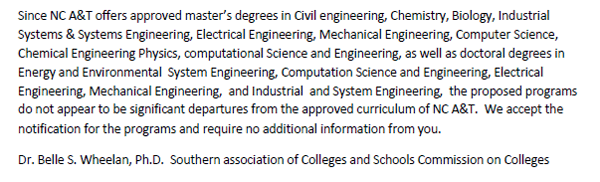
| Historical black North Carolina A&T, as one of the state's two land grant institutions, has programs through the doctoral level. Its programs include engineering, arts and sciences, agricultural and environmental sciences, business and economics, education, nursing, technology, and graduates studies. “The expected roles of a land-grant institution, is teaching agriculture and engineering, and providing cooperative extension services” . |
 |
|
|
For Liberal Arts
UNC Greensboro
with doctorial
programs in
music and
nursing to offer
Nanoscience
degrees
requires access
to NC A&T
academic
programs and
research:
“Although the
degree is in
Nanoscience
(does not
include
Nanoengineering),
students will be
given the
opportunity to
take relevant
courses at the School
of Engineering
at North
Carolina A&T
University and
must be able to
work on
collaborative
projects with
faculty in the
School of
Engineering. |
|
|
|
Unlike land
grant cross-town
historical Black
NCA&T with
strong programs
in engineering
offering
Nanoscience
constituted a
Substantive
Change as
defined by SACS
from previous
approved
circular at
historical white
women UNCG with
strong programs
in liberal
Arts. (UNCG)
Rebecca Adams to
(SACS) Tom
Benberg: Sarah
Armstrong
Subject: Request
for
interpretation
of accuracy of
nanoscience
message, April
13, 2010:
The bottom line,
however, is that
we need to
submit a full
prospectus and
need to do so as
soon as
possible. This
request will be
for approval to
initiate a new
off-campus site
(South Campus)
and to initiate
a new degree
program (MS in
Nanoscience) at
that site. Contrary
to previous
interpretations,
both represent
substantive
changes..
Due to the
confusion, they
are willing to
waive the
requirement that
we do so 6
months in
advance and will
usher it though
the approval
process in a
timely way so
that we can
accept students
into UNCG's MS
in Nanoscience
program next
fall. |
|
|
| ”The addition of a doctoral program is not an easy or simple extension of the master’s program. Unlike most master’s programs, a doctoral program is research-based. While doctoral program requirements routinely include additional course work, the central program requirement is the dissertation. The topic for the dissertation normally derives from discussion with faculty who are engaged in research and therefore knowledgeable about the “frontier of knowledge” in the discipline. For a faculty member to then properly guide and assist the student’s dissertation research, that faculty member must be an active researcher. Hence, the implementation of a doctoral program must be preceded by the assembling of faculty who are conducting publishable research in that discipline. UNIVERSITY OF NORTH CAROLINA PROGRAM DUPLICATION STUDY Submitted by James H. Woodward November 1, 2011 p12] |
|
|
NCA&T
was 4th
in
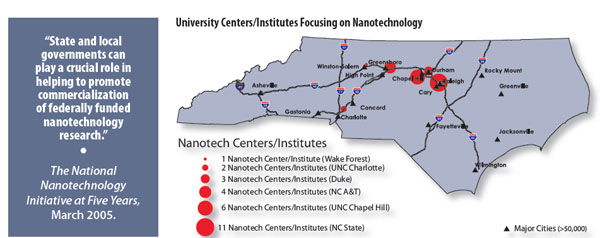
Funding
in
Nanotechnology
Research
at North
Carolina
Universities
with $11
Million
Dollars
between
2000-2005.
UNC at
Greensboro
10th
among
the 11
institutions
conducted
$45,000
dollars
of
Nanotechnology
research
between
2000
thru
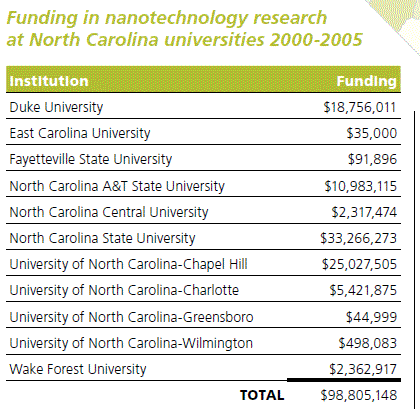
2005. |
Nanotechnology is Experimental
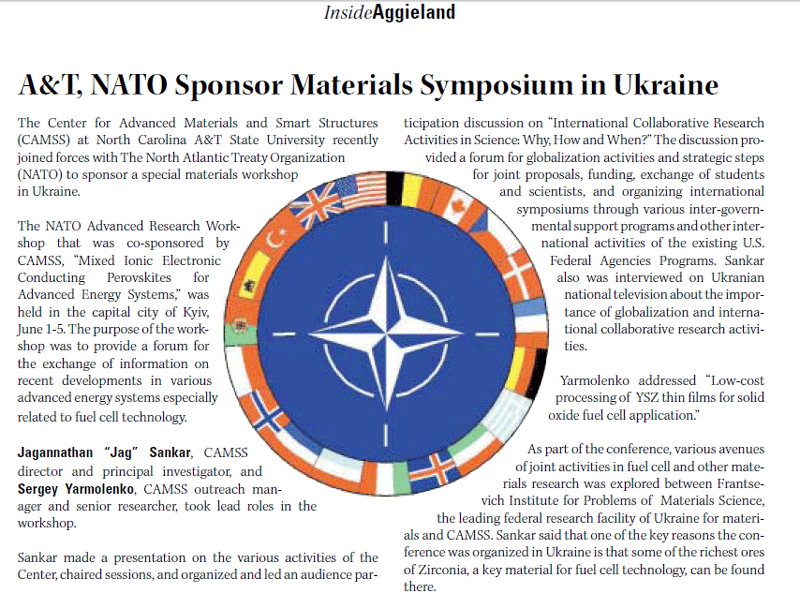
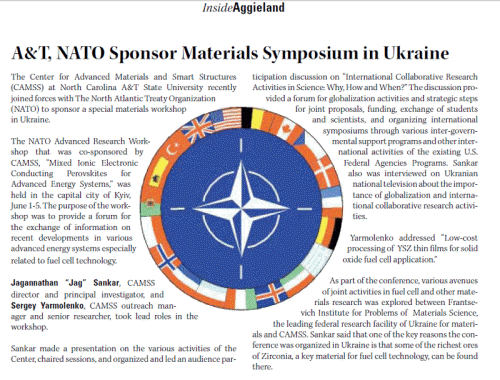 NCA&T State University has been funded at an average rate of $3-5 million per year in the area of nanoscience and nanotechnology. Most of the research in nanoengineering is done in the Center for Advanced Materials and Smart Structures (CAMSS). Several Centers and projects are under CAMSS, including the NSF Center for Research Excellence in Science and Technology (CREST), the DoD Center for Nanoscience, Nanomaterials and Multifunctional Materials (CNN) for Homeland Security, the NSF Nanoscale Science and Engineering Center (NSEC), the NSF project on US/Europe Materials Collaboration: Self-Organized Nanostructured Thin Films for Catalysis, the NSF project on Nanoscale Interdisciplinary Research Teams (NIRT), the NSF Major Research Instrumentation for Nanoengineering Research, and the NSF Nanotechnology Undergraduate Education (NUE) program. CAMSS also facilitates many of the materials research activities of the NASA-National Institute for Aerospace (NIA). In addition, the Center for Composite Materials Research (CCMR) does research in nano-enhanced composite materials and the Army Center of Excellence for Battlefield Capability Enhancements (Flexible Displays) does research in material characterization and development of novel displays. NCA&T State University has been funded at an average rate of $3-5 million per year in the area of nanoscience and nanotechnology. Most of the research in nanoengineering is done in the Center for Advanced Materials and Smart Structures (CAMSS). Several Centers and projects are under CAMSS, including the NSF Center for Research Excellence in Science and Technology (CREST), the DoD Center for Nanoscience, Nanomaterials and Multifunctional Materials (CNN) for Homeland Security, the NSF Nanoscale Science and Engineering Center (NSEC), the NSF project on US/Europe Materials Collaboration: Self-Organized Nanostructured Thin Films for Catalysis, the NSF project on Nanoscale Interdisciplinary Research Teams (NIRT), the NSF Major Research Instrumentation for Nanoengineering Research, and the NSF Nanotechnology Undergraduate Education (NUE) program. CAMSS also facilitates many of the materials research activities of the NASA-National Institute for Aerospace (NIA). In addition, the Center for Composite Materials Research (CCMR) does research in nano-enhanced composite materials and the Army Center of Excellence for Battlefield Capability Enhancements (Flexible Displays) does research in material characterization and development of novel displays. |
|
|
|
|
|
Unambiguous
North Carolina
A&T State
University was
the better host
base on :
(1) number,
location, and
mode of delivery
of existing
programs,
(2) the relation
of the program
to the
distinctiveness
of the campus
and the mission
of the campus,
(3) the demand
for the program
in the locality,
region, or State
as a whole,
(4) whether the
program would
create
unnecessary
duplication,
(5) employment
opportunities
for program
graduates,
(6) faculty
quality and
number for
offering the
program,
(7) the
availability of
campus resources
(library, space,
labs, equipment,
external
funding, and the
like) to support
the program,
(8) the number
and quality of
lower-level and
cognate programs
for supporting
the new program,
(9) impact of
program decision
on access and
affordability,
(10) the
expected quality
of the proposed
degree program, |
|
|
| |
|
Southern
Commission on Colleges
Association complicit
with UNC Board of
Governors white wash UNC
Greensboro Nanoscience
MS and PhD degrees
authorizations in order
for UNCG to accept
students into UNCG's MS
in Nanoscience program
the next fall link |
|
| |
|
* BOG Meeting Material
Graphic |
|
[2] Ribbon Cutting Sets
Gateway Project in Motion,
The Aggie Report VOLUME
EIGHT - NUMBER TWENTY - MAY
25, 2007 ]. |
|
[3] A&T
CHANCELLOR PLANS TO RETIRE:
FORT: GOALS COMPLETE,
Greensboro News & Record -
Friday, May 29, 1998 , BETH
MCMURTRIE Staff Writer |
|
4] UNCG and NC A&T partner
to create joint program in
nanotechnology, Sharlini
Sankaran, October 8, 2007,
North Carolina Board of
Science and Technology, |
| 5 [5] UNC-G,
A&T to seek $65M for
nanotech school, Matt Evans
The Business Journal Serving
the Greater Triad Area, Nov
13, 2006 |
|
[6]
Request to Establish
NCA&T/UNCG Joint School of
Nanoscience and
Nanoengineering March 5,
2007 |
|
[7] ENGINEERING CENTER
PLUGGED Greensboro News &
Record - Saturday, December
14, 1991 Author: JUSTIN
CATANOSO Staff Writer |
|
[11] Jonnelle
Davis (Nano, money No.1 on
A&T, UNC-G list News &
Record 10.04.2010) |
| [12]
[UNCG Chancellor William E.
Moran] [IM BASS UNIVERSITIES
LAY CLAIM TO FUTURE - A&T,
UNCG EAGER TO BOOST SCIENCE,
ENGINEERING PROGRAMS
Greensboro News & Record -
Sunday, January 27, 1991 |
| [13] Nanobiotechnology
Center of Innovation North
Carolina Biotechnology
Center 20/11/2007 |
|
[15] High Research Activity
The Scientist http://www.the-scientist.com/2007/03/01/s31/1 |
| [16]Jack
Scism TRIAD
SCIENTIFIC RESEARCH CENTER:
VIABLE DREAM OR PIE IN THE
SKY? , JACK SCISM,
Greensboro News & Record -
Monday, July 20, 1992 |
| [17] [Wilbur
Ross forms partnership to
invest in nanotech firms
Monday, May 23, 2005 http://triad.bizjournals.com/triad/stories/2005/05/23/daily6.html |
| [18][UNCG, A&T
University will need to be
leaders in the charge for
high-tech industry in the
Triad Nov 9, 1998, 12:00am
EST Ken Mayer Editorial |
| [19] [2] UNIVERSITIES
TO SIGN RESEARCH Agreement,
Greensboro News &Record -
Wednesday, May 19, 1999 ,
Author: TIM THORNTON Staff
Writer |
|
Alleged
Dr. Alton Thomas and David
H. Perrin signed transmittal
to Dr. Belle Wheelan,
President, COC dated May
24, 2010 |
|
[20]UNCG and NC A&T partner
to create joint program in
nanotechnology, Sharlini
Sankaran, October 8, 2007,
North Carolina Board of
Science and Technology, |
|
[26] Kevin
Holland, Contracting Officer
GSA July
3, 2006 letter to John
Merrill. Re:
U.S. Department of
Agriculture, natural
Resources Conservation
Service (NRCS) Lease
Project, Greensboro , NC |
| [27] Could Greensboro
Support Research Park? News
& Record Oct.19.1997 Beth
McMurtrie. |
| [34] letter
dated November
20, 2008 to
Dr. Beele Wheelan, President
Commission on Colleges, SACS
allegedly by Alton Thompson
(NC A&T) and David Perrin
(UNCG) |
|
|
| |
| |
|
|
Information on this site has been
included in good faith for general informational
purposes, obtained from public record, public
domain, and eye witness account. Any reference
to statue is for context only pursuant plain
language. Content is not intended to amount to
advice and we give no representation, warranty
or guarantee, whether express or implied as to
completeness. You must obtain professional or
specialist advice before taking, or refraining
from, any action on the basis of the content on
our site. Contact
information: email address contract@blacktriadnews.com |
|
All Rights
Reserved: Black Triad News Com, LLC |
|
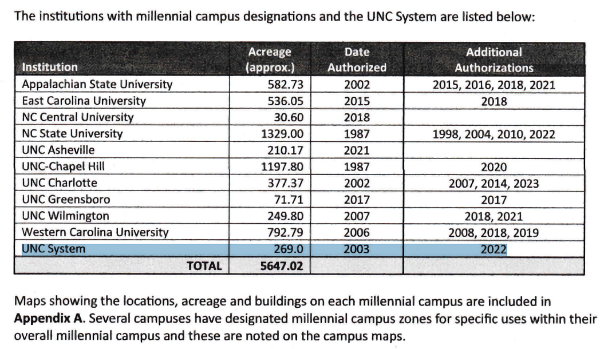
|




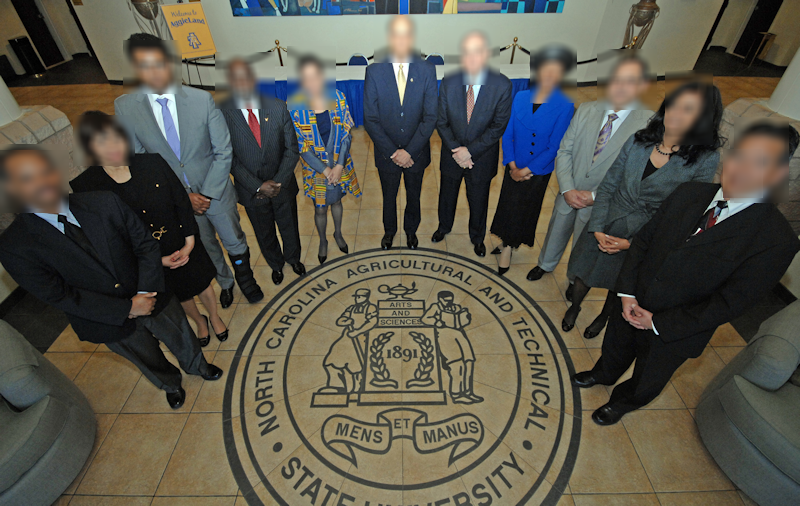


 Reported
in the Media:
Reported
in the Media: 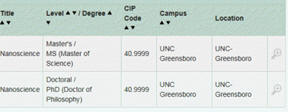


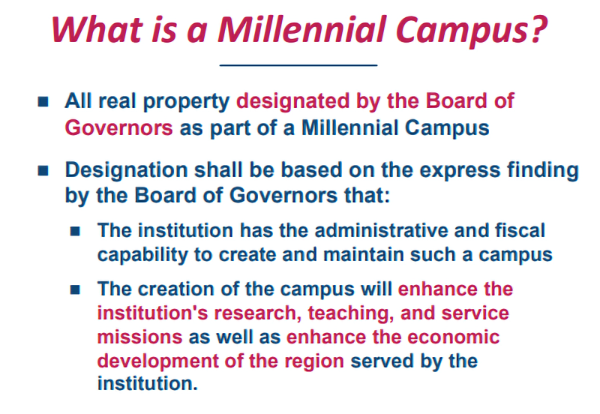




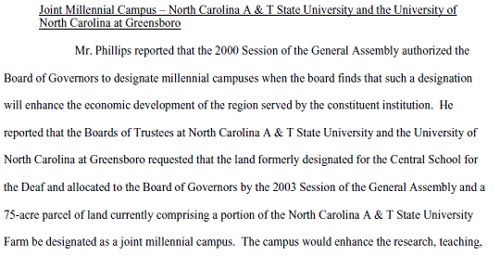
 comprising
a portion of the North Carolina A&T State
University Farm be designated as a Joint
Millennial Campus, alleged approved Oct. 10,
2003, at Appalachian State.
comprising
a portion of the North Carolina A&T State
University Farm be designated as a Joint
Millennial Campus, alleged approved Oct. 10,
2003, at Appalachian State.

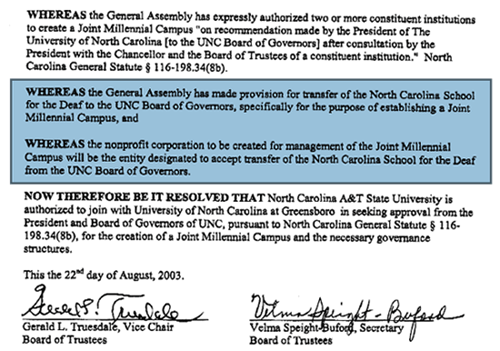
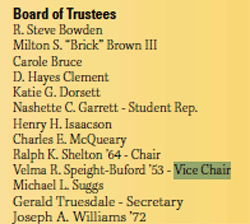 Dr.
Gerald L. Truesdale and Dr.
Velma Speight-Buford certified
alleged August 22, 2003 NC A&T
Board of Trustees resolution as
Vice
Dr.
Gerald L. Truesdale and Dr.
Velma Speight-Buford certified
alleged August 22, 2003 NC A&T
Board of Trustees resolution as
Vice